Quatuor Ébène
String Quartet
Pierre Colombet
Violin
Gabriel Le Magadure
Violin
Marie Chilemme
Viola
Yuya Okamoto
Cello
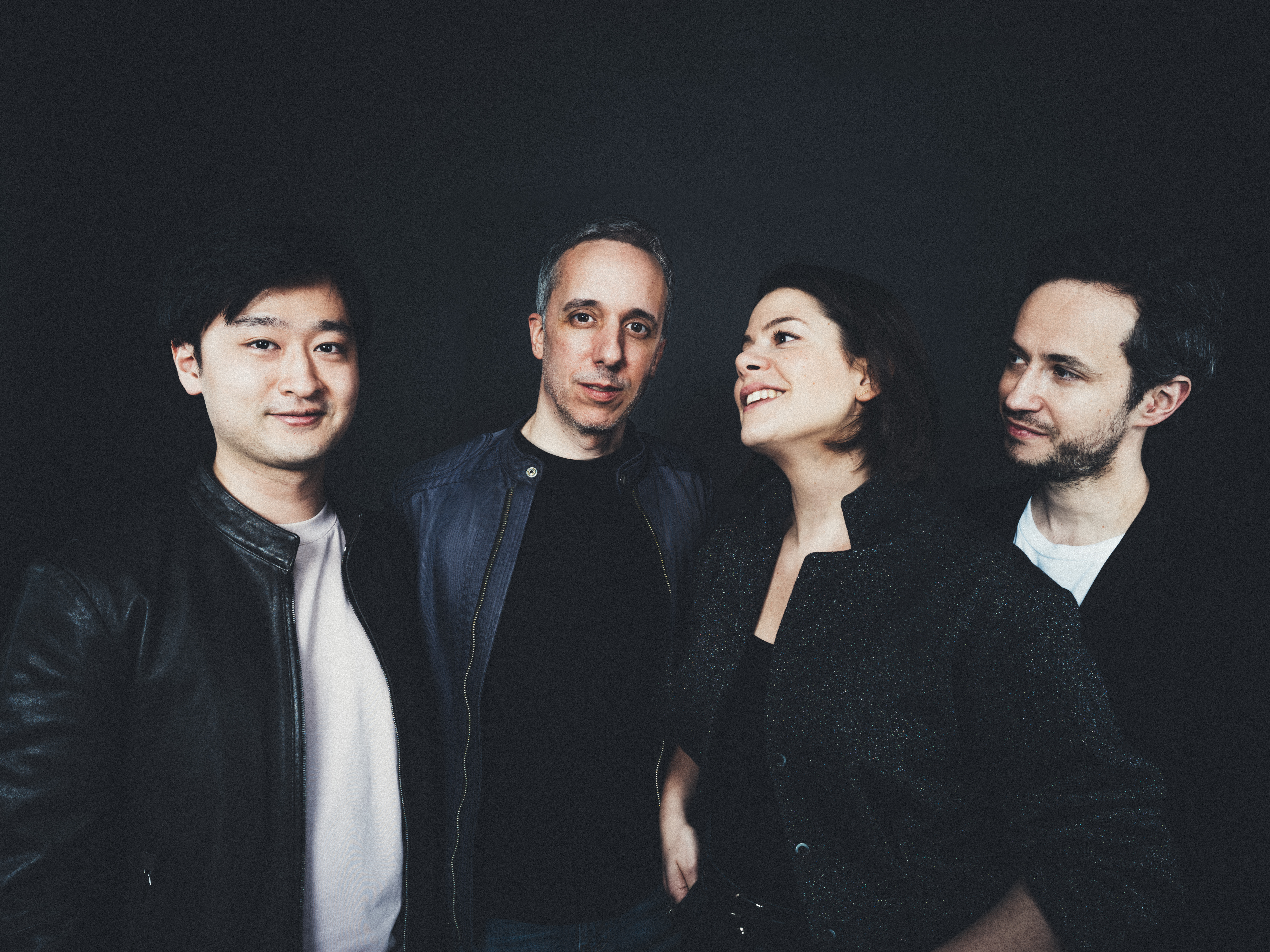

Over the past two decades Quatuor Ébène has explored everything from Beethoven and Bartók to Astor Piazzolla and Wayne Shorter.
The ensemble's telepathic understanding, artistic daring and musical individuality make for edge-of-the-seat concert experiences, intensely focused and touched by visionary insights.
The ensemble's telepathic understanding, artistic daring and musical individuality make for edge-of-the-seat concert experiences, intensely focused and touched by visionary insights.
Quatuor Ébène – Honoured with the PRIX CAECILIA…

…for it’s wonderful recording of Mozart Viola Quintets with Antoine Tamestit (Warner Classics)
Quatuor Ébène: Au revoir Raphaël! Bienvenue Yuya!
“Today, we say thank you to our dear cellist, Raphaël Merlin, who after nearly 25 years with us is embarking on his own musical journey. Raphaël, we feel deeply moved to see you leave, but it has been our greatest pleasure to have shared almost a quarter of a century together.
Now, we are delighted and proud to welcome Yuya Okamoto in the Quatuor Ébène. He is not only an extraordinary musician, but also brings a lot of happiness to our group. Yuya, we look forward to many joyful, exciting, and ambitious musical encounters with you!”
(Quatuor Ébène)
We are also delighted for and with the Quatuor Ébène that it will continue its musical adventures with this wonderful cellist. Bienvenue Yuya Okamoto!
Quatuor Ébène
- Biography
- Images
- Programme
- Schedule
- Discography
- Videos
- Links
- Contact
Biography

 Download Biography:
Attending a concert by the Quatuor Ébène is a musical and sensual happening. In the past two decades the quartet has set standards by making familiar repertoire accessible in new ways beyond perfection, and by constantly seeking the exchange with the audience. This spring, Yuya Okamoto joined the quartet’s esteemed ranks, adding a new dimension.
After studies with the Quatuor Ysaÿe in Paris as well as with Gábor Takács, Eberhard Feltz and György Kurtág, the unprecedented and outstanding success at the 2004 ARD Music Competition followed, marking the beginning of the Quatuor Ébène's rise to fame, which resulted in numerous other prizes and awards: In 2005, for example, the quartet was awarded the Belmont Prize of the Forberg-Schneider Foundation; in 2007 it was prize winner of the Borletti-Buitoni Trust, and in 2019 - as the first ensemble ever – it was honored with the Frankfurt Music Prize.
In addition to the traditional repertoire, the quartet also dives into other styles ("A String Quartet that can easily morph into a jazz band" New York Times, 2009). What began in 1999 as a distraction in the university’s practice rooms - improvising on jazz standards & pop songs - has become a trademark of Quatuor Ébène. To date, the quartet has released 3 albums in these genres, Fiction (2010), Brazil (2014) and Eternal Stories (2017). Ine June 2024, the ensemble will present “Waves”, a new project with the electronic sound artist Xavier Tribolet. The free approach to various styles creates a tension that is beneficial to every aspect of their artistic work. The complexity of their oeuvre has been greeted enthusiastically by audiences and critics.
Quatuor Ébène's albums, with recordings of Bartók, Beethoven, Debussy, Haydn, Fauré and the Mendelssohn siblings, have received numerous awards, including Gramophone, BBC Music Magazine, and the Midem Classic Award. In 2015 & 2016 the musicians dedicated themselves to the theme "Lied". They participated in the album "Green (Mélodies françaises)" by Philippe Jaroussky and released a Schubert album with Matthias Goerne (arrangements for String Quartet, baritone, and double bass, by Raphaël Merlin) and the Schubert String Quintet with Gautier Capuçon. Together with Antoine Tamestit, Quatuor Ébène recorded the Mozart String Quintets K. 515 and K. 516, which were released in the spring of 2023. The album has received accolades such as Choc Classica, Diapason d'Or, Gramophone of the month.
First and foremost is the recording of Beethoven’s 16 String Quartets, for which the quartet travelled across six continents between May 2019 and January 2020. With this complete recording, the four celebrated their 20th stage anniversary, which they additionally crowned with performances of the complete String Quartet cycle in major European venues such as the Philharmonie de Paris or the Alte Oper Frankfurt. Invitations from Carnegie Hall New York, the Verbier Festival and the Vienna Konzerthaus were also on the agenda.
In addition to the traditional repertoire, the quartet also dives into other styles ("A String Quartet that can easily morph into a jazz band" New York Times, 2009). What began in 1999 as a distraction in the university’s practice rooms - improvising on jazz standards & pop songs - has become a trademark of Quatuor Ébène. To date, the quartet has released 3 albums in these genres, Fiction (2010), Brazil (2014) and Eternal Stories (2017). Ine June 2024, the ensemble will present “Waves”, a new project with the electronic sound artist Xavier Tribolet. The free approach to various styles creates a tension that is beneficial to every aspect of their artistic work. The complexity of their oeuvre has been greeted enthusiastically by audiences and critics.
Quatuor Ébène's albums, with recordings of Bartók, Beethoven, Debussy, Haydn, Fauré and the Mendelssohn siblings, have received numerous awards, including Gramophone, BBC Music Magazine, and the Midem Classic Award. In 2015 & 2016 the musicians dedicated themselves to the theme "Lied". They participated in the album "Green (Mélodies françaises)" by Philippe Jaroussky and released a Schubert album with Matthias Goerne (arrangements for String Quartet, baritone, and double bass, by Raphaël Merlin) and the Schubert String Quintet with Gautier Capuçon. Together with Antoine Tamestit, Quatuor Ébène recorded the Mozart String Quintets K. 515 and K. 516, which were released in the spring of 2023. The album has received accolades such as Choc Classica, Diapason d'Or, Gramophone of the month.
First and foremost is the recording of Beethoven’s 16 String Quartets, for which the quartet travelled across six continents between May 2019 and January 2020. With this complete recording, the four celebrated their 20th stage anniversary, which they additionally crowned with performances of the complete String Quartet cycle in major European venues such as the Philharmonie de Paris or the Alte Oper Frankfurt. Invitations from Carnegie Hall New York, the Verbier Festival and the Vienna Konzerthaus were also on the agenda.
„The way scents seem to transition into sounds, echoes resonate from the depths of space, and the Four intertwining attentively, only to then grab hold vigorously and expand vivaciously - it was exhilarating.”Süddeutsche Zeitung, March 2023
In January 2021, the quartet was appointed by the University of Music and Performing Arts in Munich to establish a String Quartet class as part of the newly founded „Quatuor Ébène Academy“.
Since the past season, the quartet has been performing a joint cycle with the Belcea Quartet at the Wiener Konzerthaus. For the 23/24 season the Philharmonie Luxembourg has chosen the Quatuor Ébène as resident ensemble. Next to chamber music concerts, they will present John Adam’s Absolute Jest together with the Luxembourg Philharmonic. As Quatuor en résidence à Radio France, they will again perform three concerts in Paris.
Further highlights of the season include concerts at the Salzburg Festival, Berliner Philharmonie, Megaron Athens, Wigmore Hall London and Carnegie Hall in New York City, NY.
Instruments & bows
Pierre Colombet is playing two violins: a 1717 Antonio Stradivari violin, the « Piatti », kindly loaned by a generous sponsor through the Beare’s International Violin Society, and a 1736 Matteo Goffriller violin generously loaned by Gabriele Forberg-Schneider, as well as a bow by Charles Tourte (Paris, 19th century) also loaned by Gabriele Forberg-Schneider.
Gabriel Le Magadure is playing two violins: the ex-Baron Rothschild Peter Guarneri of Venice kindly loaned by the Miller-Porter Collection through the Beare’s International Violin Society, and a violin from around 1740 with a Guarneri label loaned by Gabriele Forberg-Schneider. He plays a bow by Dominique Pecatte (ca.1845) loaned by Gabriele Forberg-Schneider.
Marie Chilemme is playing two violas : a 1734 Stradivari, the « Gibson », generously loaned by the « Stradivari Foundation Habisreutinger », and a viola by Marcellus Hollmayr, Füssen (1625) loaned by Gabriele Forberg-Schneider.
Yuya Okamoto is playing a violoncello by Giovanni Grancino, Milan, from 1682.
2023/2024
Since the past season, the quartet has been performing a joint cycle with the Belcea Quartet at the Wiener Konzerthaus. For the 23/24 season the Philharmonie Luxembourg has chosen the Quatuor Ébène as resident ensemble. Next to chamber music concerts, they will present John Adam’s Absolute Jest together with the Luxembourg Philharmonic. As Quatuor en résidence à Radio France, they will again perform three concerts in Paris.
Further highlights of the season include concerts at the Salzburg Festival, Berliner Philharmonie, Megaron Athens, Wigmore Hall London and Carnegie Hall in New York City, NY.
Instruments & bows
Pierre Colombet is playing two violins: a 1717 Antonio Stradivari violin, the « Piatti », kindly loaned by a generous sponsor through the Beare’s International Violin Society, and a 1736 Matteo Goffriller violin generously loaned by Gabriele Forberg-Schneider, as well as a bow by Charles Tourte (Paris, 19th century) also loaned by Gabriele Forberg-Schneider.
Gabriel Le Magadure is playing two violins: the ex-Baron Rothschild Peter Guarneri of Venice kindly loaned by the Miller-Porter Collection through the Beare’s International Violin Society, and a violin from around 1740 with a Guarneri label loaned by Gabriele Forberg-Schneider. He plays a bow by Dominique Pecatte (ca.1845) loaned by Gabriele Forberg-Schneider.
Marie Chilemme is playing two violas : a 1734 Stradivari, the « Gibson », generously loaned by the « Stradivari Foundation Habisreutinger », and a viola by Marcellus Hollmayr, Füssen (1625) loaned by Gabriele Forberg-Schneider.
Yuya Okamoto is playing a violoncello by Giovanni Grancino, Milan, from 1682.
2023/2024
This biography is to be reproduced without any changes, omissions or additions, unless expressly authorized by artist management.
Images

© Julien Mignot
© Julien Mignot

© Julien Mignot

© Julien Mignot


© Julien Mignot

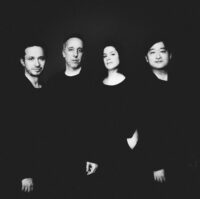
© Julien Mignot

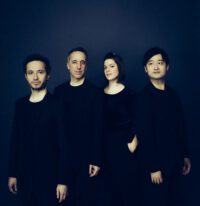
© Julien Mignot

© Julien Mignot


© Julien Mignot
© Julien Mignot
Programme
2024 / 2025
You’ll find the current programmes in the IMPRESARIUM of the 24/25 season
2023 / 2024
Program I
Autumn 2023
Haydn: String Quartet in G minor, Op. 20 No. 3, Hob. III: 33 (No. 3 of “Sonnenquartette”)
Bartók: String Quartet No. 3, Sz 85
***
Schubert: String Quartet No. 15, Op. 16,1 D 887
Program II
Spring 2024
Mozart: String Quartet No. 21 in D major, K 575
Schnittke: String Quartet No. 3
***
Grieg: String Quartet in G minor, Op. 27
Octet
Quatuor Ébène & Belcea Quartet
Quatuor Ébène & Belcea Quartet
May 2024
Mendelssohn: Octet in E-flat major, Op. 20
***
Enescu: Octet in C major, Op. 7
Schedule
22/05/2024
19:30 h
19:30 h
Philharmonie de Luxembourg (Salle de Musique de Chambre)
Luxemburg, Luxembourg
Luxemburg, Luxembourg
Belcea Quartet, Quatuor Ébène
23/05/2024
19:30 h
19:30 h
Auditorio Nacional de Música CNDM (Sala de Cámara)
Madrid, Spain
Madrid, Spain
Belcea Quartet, Quatuor Ébène
27/05/2024
19:30 h
19:30 h
Champs Hill Music Room
West Sussex RH20 1LY, United Kingdom
West Sussex RH20 1LY, United Kingdom
Belcea Quartet, Quatuor Ébène
14/06/2024
18:00 h
18:00 h
Parktheater Göggingen, Kurhaus Göggingen
Augsburg, Germany
Augsburg, Germany
Quatuor Ébène, Xavier Tribolet
02/08/2024
19:30 h
19:30 h
Église
Verbier, Switzerland
Verbier, Switzerland
09/08/2024
17:00 h
17:00 h
Kirche San Gian
Celerina, Switzerland
Celerina, Switzerland
14/08/2024
19:30 h
19:30 h
Mozarteum, Großer Saal
Salzburg, Austria
Salzburg, Austria
Discography
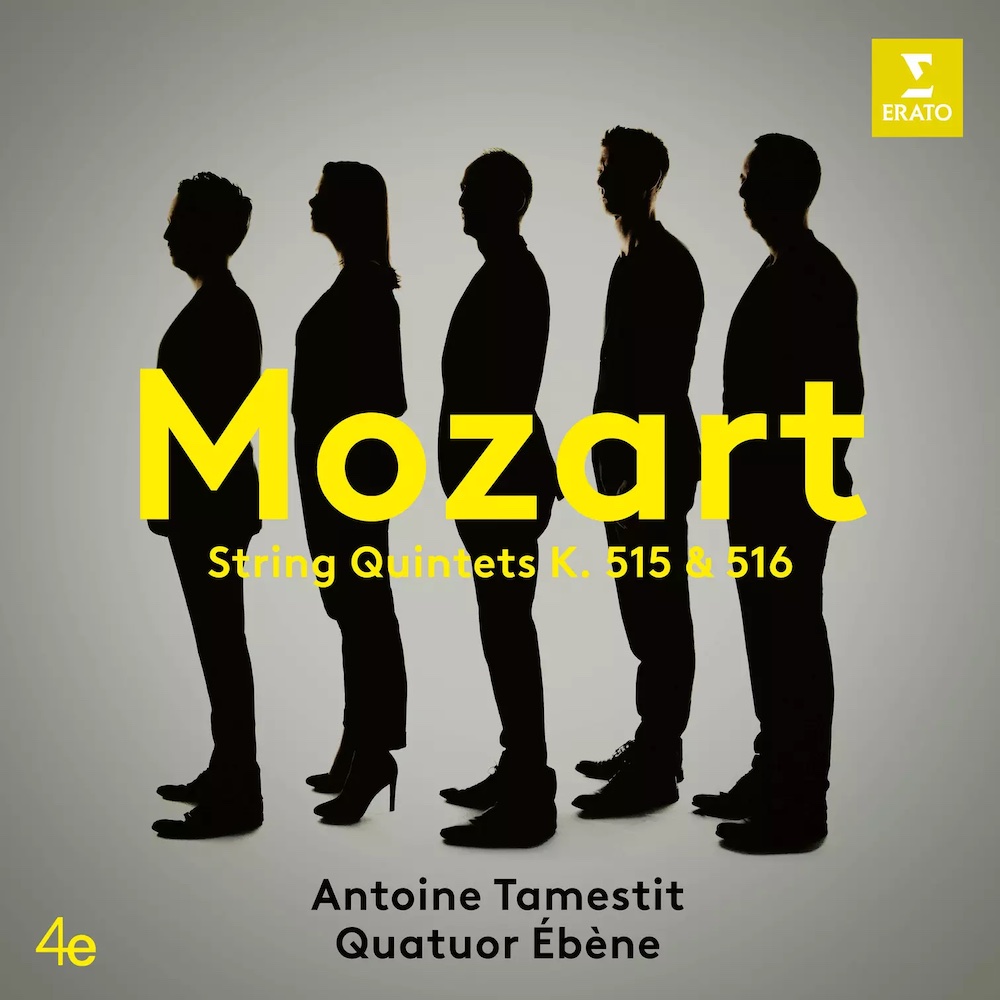
Mozart: String Quintets
Wolfgang Amadeus Mozart
String Quintet, K 515
String Quintet, K 516
Antoine Tamestit - Viola
String Quintet, K 515
String Quintet, K 516
Antoine Tamestit - Viola
'Round Midnight
Henri Dutilleux
String Quartet "Ainsi la Nuit"
Raphaël Merlin
"Night Bridge"
Arnold Schoenberg
String Sextet, Op. 4 "Transfigured Night"
Antoine Tamestit - Viola
Nicolas Altstaedt - Violoncello
String Quartet "Ainsi la Nuit"
Raphaël Merlin
"Night Bridge"
Arnold Schoenberg
String Sextet, Op. 4 "Transfigured Night"
Antoine Tamestit - Viola
Nicolas Altstaedt - Violoncello
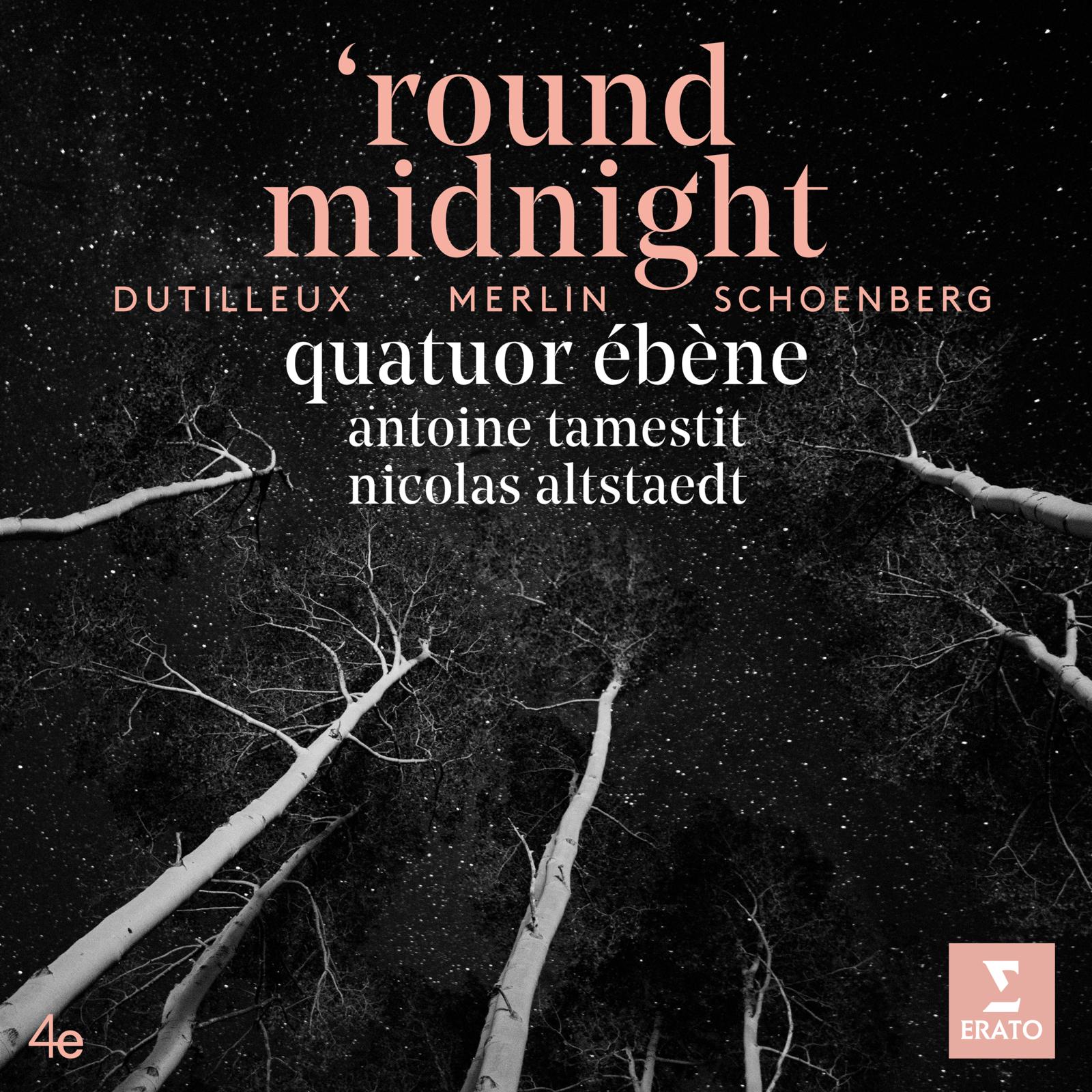
Quatuor Ébène - Vinyl
Ludwig van Beethoven
Live recorded at the Elisabeth Murdoch Hall, Melbourne Recital Centre
String Quartet No. 2, Op. 18 No. 2
String Quartet No. 11, Op. 95 'Quartetto Serioso'
Live recorded at the Suntory Hall Tokyo
String Quartet No. 13, Op. 130 with 'Grosse Fuge', Op. 133
Live recorded at the Elisabeth Murdoch Hall, Melbourne Recital Centre
String Quartet No. 2, Op. 18 No. 2
String Quartet No. 11, Op. 95 'Quartetto Serioso'
Live recorded at the Suntory Hall Tokyo
String Quartet No. 13, Op. 130 with 'Grosse Fuge', Op. 133
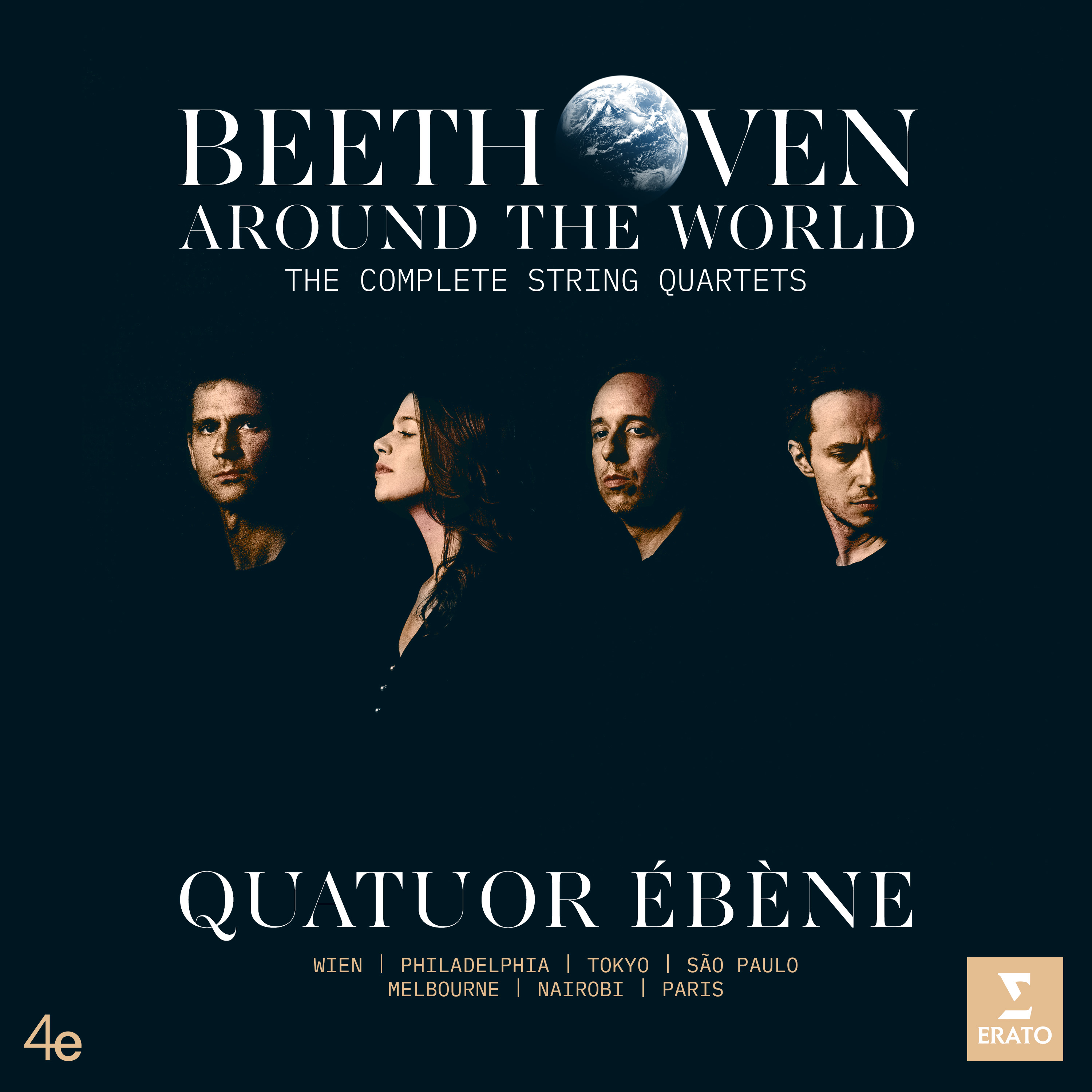
Beethoven: The complete String Quartets - "Beethoven Around the World“
Ludwig van Beethoven
Disc No. 1 - Live recorded at the Perelman Theater, Kimmel Center of the Performing Arts, Philadelphia
String Quartet No. 1, Op. 18 No. 1
String Quartet No. 14, Op. 131
Disc No. 2 - Live recorded at the Mozart Saal, Konzerthaus Wien
String Quartet No. 7, Op. 59 No. 1 'Razumovsky'
String Quartet No. 8, Op. 59 No. 2 'Razumovsky'
Disc No. 3 - Live recorded at the Suntory Hall Tokyo
String Quartet No. 9, Op. 59 No. 3 'Razumovsky'
String Quartet No. 13, Op. 130 with 'Grosse Fuge', Op. 133
Disc No. 4 - Live recorded at Sala São Paulo, São Paulo
String Quartet No. 6, Op. 18 No. 6
String Quartet No. 12, Op. 127
Disc No. 5 - Live recorded at the Elisabeth Murdoch Hall, Melbourne Recital Centre
String Quartet No. 2, Op. 18 No. 2
String Quartet No. 11, Op. 95 'Quartetto Serioso'
String Quartet No. 10, Op. 74 'Harp'
Disc No. 6 - Live recored at Auditorium de l'Alliance Française, Nairobi
String Quartet, Op. 18 No. 4
String Quartet, Op. 18 No. 5
String Quartet, Op. 135
Disc No. 7 - Live recorded at the Philharmonie de Paris
String Quartet No. 3, Op. 18 No. 3
String Quartet No. 15, Op. 132
Disc No. 1 - Live recorded at the Perelman Theater, Kimmel Center of the Performing Arts, Philadelphia
String Quartet No. 1, Op. 18 No. 1
String Quartet No. 14, Op. 131
Disc No. 2 - Live recorded at the Mozart Saal, Konzerthaus Wien
String Quartet No. 7, Op. 59 No. 1 'Razumovsky'
String Quartet No. 8, Op. 59 No. 2 'Razumovsky'
Disc No. 3 - Live recorded at the Suntory Hall Tokyo
String Quartet No. 9, Op. 59 No. 3 'Razumovsky'
String Quartet No. 13, Op. 130 with 'Grosse Fuge', Op. 133
Disc No. 4 - Live recorded at Sala São Paulo, São Paulo
String Quartet No. 6, Op. 18 No. 6
String Quartet No. 12, Op. 127
Disc No. 5 - Live recorded at the Elisabeth Murdoch Hall, Melbourne Recital Centre
String Quartet No. 2, Op. 18 No. 2
String Quartet No. 11, Op. 95 'Quartetto Serioso'
String Quartet No. 10, Op. 74 'Harp'
Disc No. 6 - Live recored at Auditorium de l'Alliance Française, Nairobi
String Quartet, Op. 18 No. 4
String Quartet, Op. 18 No. 5
String Quartet, Op. 135
Disc No. 7 - Live recorded at the Philharmonie de Paris
String Quartet No. 3, Op. 18 No. 3
String Quartet No. 15, Op. 132
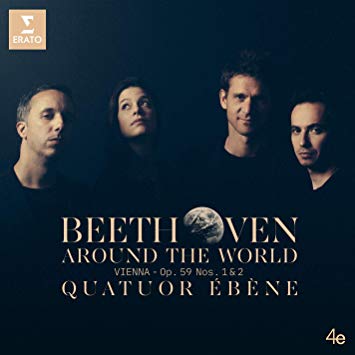
Beethoven Around the World - Vienna
Ludwig van Beethoven
String Quartet, Op. 59 No. 1 'Razumovsky'
String Quartet, Op. 59 No. 2 'Razumovsky'
String Quartet, Op. 59 No. 1 'Razumovsky'
String Quartet, Op. 59 No. 2 'Razumovsky'
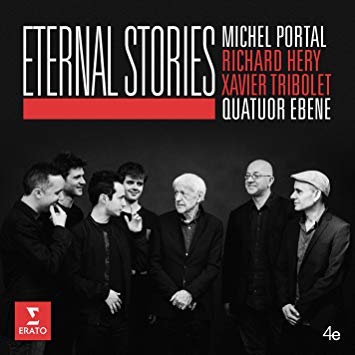
Eternal Stories
Pierre Colombet
City Birds
Michel Portal
L'Abandonite
Judy Garland
Eternal Story
Solitudes (from Triology)
Xavier Tribolet
Élucubration
Astor Piazzolla
Tango Sensations
I. Asleep
II. Loving
III. Anxiety
Gabriel Le Magadure
Plus l'Temps
Raphaël Merlin
Le Corbillon
Adrien Boisseau
It was nice living here
Michel Portal - Clarinets, Bandoneon
Richard Héry - Percussion
Xavier Tribolet - Electronics
Fabrice Planchat - Sound
City Birds
Michel Portal
L'Abandonite
Judy Garland
Eternal Story
Solitudes (from Triology)
Xavier Tribolet
Élucubration
Astor Piazzolla
Tango Sensations
I. Asleep
II. Loving
III. Anxiety
Gabriel Le Magadure
Plus l'Temps
Raphaël Merlin
Le Corbillon
Adrien Boisseau
It was nice living here
Michel Portal - Clarinets, Bandoneon
Richard Héry - Percussion
Xavier Tribolet - Electronics
Fabrice Planchat - Sound
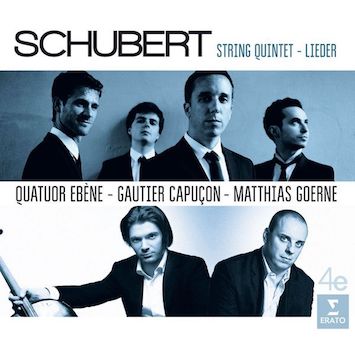
Schubert: String Quintet and Lieder
Franz Schubert
String Quintet, D 956
Lieder (arranged for String Quartet, Baritone and Double bass by Raphaël Merlin)
Die Götter Griechenlands, D 677
Der Tod und das Mädchen, D 531
Der Jüngling und der Tod, D 545
Atys, D 585
Der liebliche Stern, D 861
Matthias Goerne - Baritone
Gautier Capuçon - Cello
Laurene Durantel - Double bass
String Quintet, D 956
Lieder (arranged for String Quartet, Baritone and Double bass by Raphaël Merlin)
Die Götter Griechenlands, D 677
Der Tod und das Mädchen, D 531
Der Jüngling und der Tod, D 545
Atys, D 585
Der liebliche Stern, D 861
Matthias Goerne - Baritone
Gautier Capuçon - Cello
Laurene Durantel - Double bass
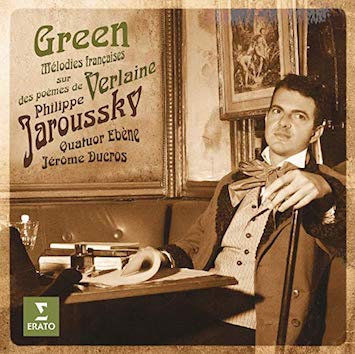
Green (Melodies francaises sur des Poemes de Verlaine)
Ferre: Colloque sentimental; Ecoutez la chanson bien douce
Faure: Mandoline; C'est l'extase; Green; En sourdine; Prison; Spleen; Clair de lune; La lune blanche luit dans les bois
Severac: Prison
Szulc: Clair de lune
Debussy: En sourdine; Fantoches; Clair de lune; Mandoline; Il pleure dans mon coeur; Green; Les Ingenus; Le Faune; Colloque sentimental
Chausson: Ecoutez la chanson bien douce; Apaisement
Bordes: O triste, triste etait mon ame; Promenade sentimentale
Saint-Saens: Le Vent dans la plaine
Chabrier: Air de Fisch-Ton-Kan; Air de Poussah
Hahn: En sourdine; Chanson d’automne; D’une prison
Honegger: Un grand sommeil noir
Massenet: Revons, c’est l’heure
Varese: Un grand sommeil noir
Caplet: Green
Poldowski: L’Heure exquise; Colombine; Mandoline
Trenet: Verlaine
Schmitt: Il pleure dans mon coeur
Koechlin: Il pleure dans mon coeur
Canteloube: Colloque sentimental
Brassens: Colombine
Philippe Jaroussky - Countertenor
Jerome Ducros - Piano
Nathalie Stutzmann - Contralto
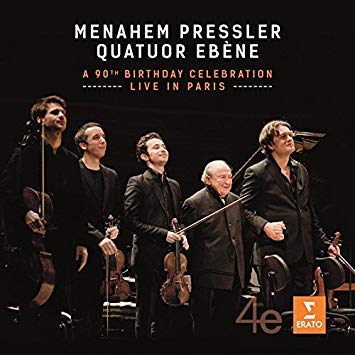
A 90th birthday celebration - Live in Paris
CD & DVD
CD
Antonín Dvořák
Piano Quintet, Op. 81
Franz Schubert
Piano Quintet, D 667, "The Trout"
DVD
Antonín Dvořák
Piano Quintet, Op. 81
Franz Schubert
Piano Quintet, D 667, "The Trout"
Winterreise, D 911 ( V. Der Lindenbaum, XI Fruhlingstraum, XV Die Kraehe, XXIV Der Leiermann)
Claude Debussy
String Quartet, Op. 10 (3. Andantino, doucement expressif)
Frédéric Chopin
Nocturne C-sharp minor, op. posth.
Recorded LIVE at Salle Pleyel, Paris on November 7th, 2013.
Menahem Pressler - Piano
Christopher Prégardien - Tenor
Benjamin Berlioz - Double bass
CD
Antonín Dvořák
Piano Quintet, Op. 81
Franz Schubert
Piano Quintet, D 667, "The Trout"
DVD
Antonín Dvořák
Piano Quintet, Op. 81
Franz Schubert
Piano Quintet, D 667, "The Trout"
Winterreise, D 911 ( V. Der Lindenbaum, XI Fruhlingstraum, XV Die Kraehe, XXIV Der Leiermann)
Claude Debussy
String Quartet, Op. 10 (3. Andantino, doucement expressif)
Frédéric Chopin
Nocturne C-sharp minor, op. posth.
Recorded LIVE at Salle Pleyel, Paris on November 7th, 2013.
Menahem Pressler - Piano
Christopher Prégardien - Tenor
Benjamin Berlioz - Double bass
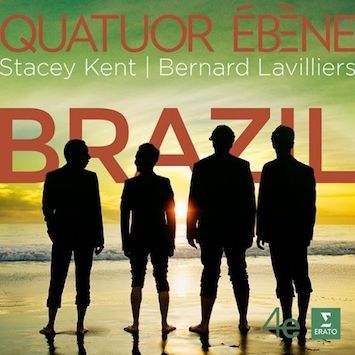
Brazil
O‘gringo with Bernard Lavilliers (Music & Lyrics: Bernard Lavilliers)
So Nice with Stacey Kent (Music & Lyrics: Marcos Valle, Paulo Valle / Adaptation: Norman Gimbel)
I Can’t Help It with Stacey Kent (Music & Lyrics: Stevie Wonder / Susaye Greene)
Ana Maria (Music: Wayne Shorter)
Fragile with Stacey Kent (Music & Lyrics: Sting)
Guitar Song with Bernard Lavilliers (Music & Lyrics: Bernard Lavilliers)
Àguas de Marços with Stacey Kent & Marcos Valle (Music & Lyrics: Tom Jobim)
Bebê (Music: Hermeto Pasquale)
The Ice Hotel with Stacey Kent (Music & Lyrics: Jim Tomlinson, Kazuo Ishiguro)
Salomé with Bernard Lavilliers (Music & Lyrics: Bernard Lavilliers)
Libertango (Music: Astor Piazzolla)
Smile with Stacey Kent (Music: Charlie Chaplin / Lyrics: Geoffrey Parsons, John Turner)
Brazil Odyssey with Brazil Choir & Brazil String Orchestra (Music: Pierre Colombet, Gabriel Le Magadure, Mathieu Herzog, Raphaël Merlin, on a theme by Ary Barroso / Lyrics: Bob Russell)
Stacey Kent - Voice
Bernard Lavilliers - Voice
Marcos Valle - Voice
Jim Tomlinson - Saxophone
Richard Héry - Percussion
Mino Cinelu - Drums
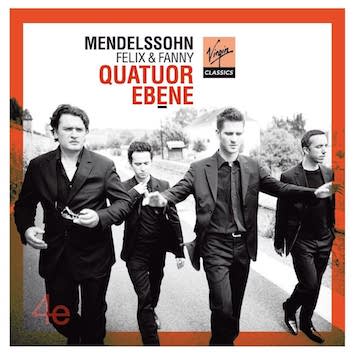
Felix & Fanny
Felix Mendelssohn
String Quartet No. 2, Op. 13
String Quartet No. 6, Op. 80
Fanny Mendelssohn
String Quartet in E-flat major
String Quartet No. 2, Op. 13
String Quartet No. 6, Op. 80
Fanny Mendelssohn
String Quartet in E-flat major
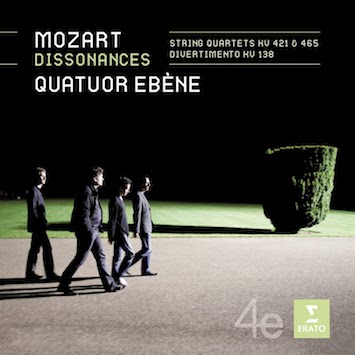
Mozart: Dissonances
Wolfgang Amadeus Mozart
String Quartet, K 421
Divertimento, K 138
String Quartet, K 465, "Dissonance"
String Quartet, K 421
Divertimento, K 138
String Quartet, K 465, "Dissonance"
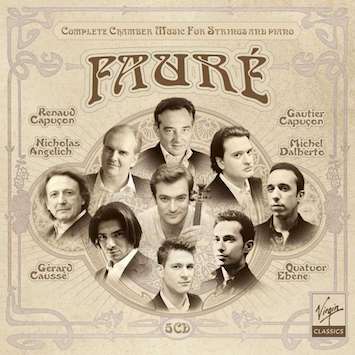
Fauré: The complete chamber music
Gabriel Fauré
Disc No. 1
Sonata No. 1, Op. 13
Berceuse, Op. 16
Romance, Op. 28
Andante, Op. 75
"Morceau de Lecture"
Sonata for Cello and Piano No. 2, Op. 108
Disc No. 2
Sonata, Op. 109
Elegy, Op. 24
"Papillon", Op. 77
Romance, Op. 69
Serenade, Op. 98
Sicilienne, Op. 78
Sonata No. 2, Op. 117
Disc No. 3
Trio for Piano and Strings, Op. 120
String Quartet, Op. 121
Disc No. 4
Piano Quintet, Op. 15
Piano Quintet No. 2, Op. 45
Disc No. 5
Piano Quintet No. 1, Op. 89
Piano Quintet No. 2, Op. 115
Morceau de lecture (for two Cellos)
Renaud Capuçon - Violin
Gautier Capuçon - Cello
Gérard Caussé - Viola
Nicolas Angelich - Piano
Michel Dalberto - Piano
Disc No. 1
Sonata No. 1, Op. 13
Berceuse, Op. 16
Romance, Op. 28
Andante, Op. 75
"Morceau de Lecture"
Sonata for Cello and Piano No. 2, Op. 108
Disc No. 2
Sonata, Op. 109
Elegy, Op. 24
"Papillon", Op. 77
Romance, Op. 69
Serenade, Op. 98
Sicilienne, Op. 78
Sonata No. 2, Op. 117
Disc No. 3
Trio for Piano and Strings, Op. 120
String Quartet, Op. 121
Disc No. 4
Piano Quintet, Op. 15
Piano Quintet No. 2, Op. 45
Disc No. 5
Piano Quintet No. 1, Op. 89
Piano Quintet No. 2, Op. 115
Morceau de lecture (for two Cellos)
Renaud Capuçon - Violin
Gautier Capuçon - Cello
Gérard Caussé - Viola
Nicolas Angelich - Piano
Michel Dalberto - Piano
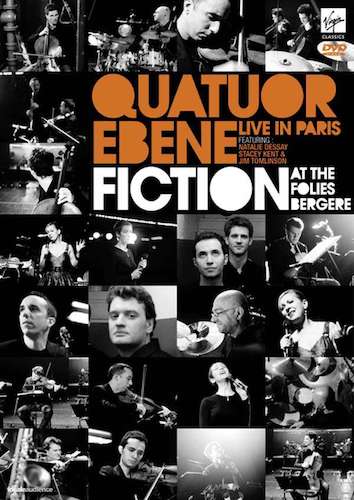
FICTION - DVD
Fiction... ... at The Folies Bergères - Live in Paris
Recorded on November 15th, 2010
Stacey Kent - Voice
Natalie Dessay - Voice
Jim Tomlinson - Saxophone
Richard Héry - Percussion
Recorded on November 15th, 2010
Stacey Kent - Voice
Natalie Dessay - Voice
Jim Tomlinson - Saxophone
Richard Héry - Percussion
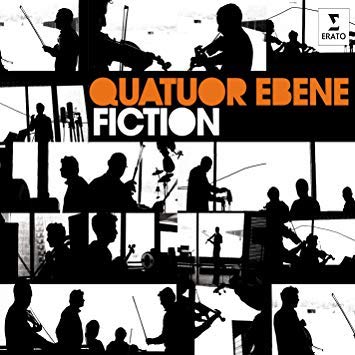
FICTION
Misirlou after Pulp Fiction (Milton Leeds / Fred Wise / N. Roubanis / S. K. Russell)
Amado mío (Doris Fisher / Allan Roberts)
Luz Casal (vocal)
Nature Boy (Eden Ahbez)
Raphaël Merlin, Pierre Colombet (solo), Richard Héry (drums)
Come together (John Lennon / Paul McCartney) Songs
Pierre Colombet (solo), Richard Héry (drums)
Unrequited (Bradford Mehldau)
Pierre Colombet (solo)
Intro Calling you
Richard Héry (drums solo)
Calling you after Bagdad Café (Bob Telson)
Pierre Colombet (solo), Richard Héry (drums)
Corcovado (Antonio Jobim)
Stacey Kent (vocal)
Nothing Personal (Don Grolnick)
Gabriel Le Magadure, Pierre Colombet (solo), Richard Héry (drums)
Footprints (Wayne Shorter)
Pierre Colombet (solo), Richard Héry (drums)
Lilac Wine (James Shelton)
Fanny Ardant (vocal)
Smile (John Turner-Geoffrey Parsons/Charles Chaplin)
Quatuor Ebène (voices), Raphaël Merlin (solo), Richard Héry (drums, chorus)
Someday my prince will come after Snow White and the seven dwarfs (Larry Morey/Frank Churchill)
Pierre Colombet (bass), Mathieu Herzog, Gabriel Le Magadure (lead voices),
Raphaël Merlin (soprano), Pierre Colombet (solo)
Somewhere after "Over the rainbow" after The Wizard of Oz
Natalie Dessay (vocal), Mathieu Herzog (solo)
7-29-04 The Day Of after Ocean's 12 (David Holmes)
Mathieu Herzog (funk guitar and solo), Pierre Colombet (Ruggieri Violin from the 17th century),
Richard Héry (drums)
Streets of Philadelphia after Philadelphia (Bruce Springsteen)
Mathieu Herzog (vocal), Richard Héry (drums)
(All bass parts played by Raphaël Merlin)
Fanny Ardant - Voice
Luz Casal - Voice
Natalie Dessay - Voice
Stacey Kent - Voice
Richard Héry - Percussion
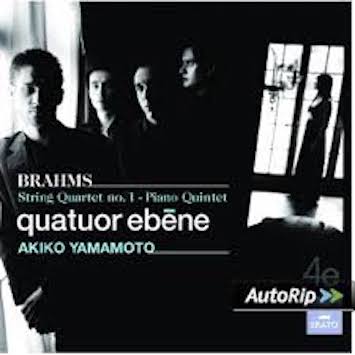
Brahms: Quartet & Piano Quintet
Johannes Brahms
String Quartet, Op. 51 No. 1
Piano Quintet, Op. 34
Akiko Yamamoto - Piano
String Quartet, Op. 51 No. 1
Piano Quintet, Op. 34
Akiko Yamamoto - Piano
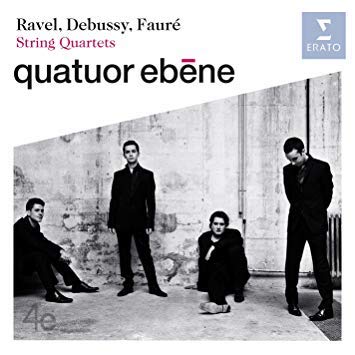
Ravel - Debussy - Fauré
Claude Debussy
String Quartet, Op. 10
Gabriel Fauré
String Quartet, Op. 121
Maurice Ravel
String Quartet F major
String Quartet, Op. 10
Gabriel Fauré
String Quartet, Op. 121
Maurice Ravel
String Quartet F major
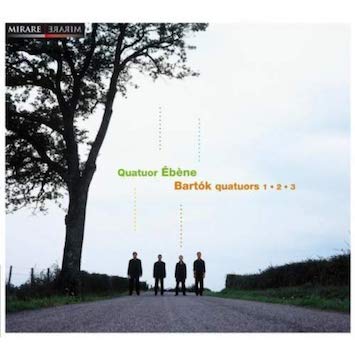
Bartók: String Quartets
Béla Bartók
String Quartet No. 1, Op. 7, Sz. 40
String Quartet No. 2, Op. 17, Sz. 67
String Quartet No. 3, Sz. 85
String Quartet No. 1, Op. 7, Sz. 40
String Quartet No. 2, Op. 17, Sz. 67
String Quartet No. 3, Sz. 85
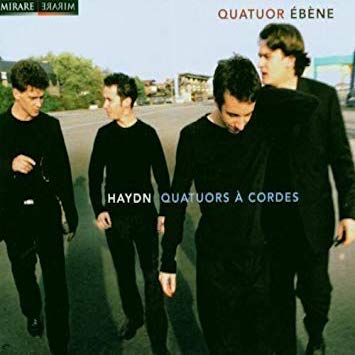
Haydn: String Quartets
Joseph Haydn
String Quartet, Op. 64 No. 5
String Quartet, Op. 33 No. 1
String Quartet, Op. 76 No. 1
String Quartet, Op. 64 No. 5
String Quartet, Op. 33 No. 1
String Quartet, Op. 76 No. 1
Videos
Links
 Official Website
 Facebook
 Twitter
Contact
Linda Uschinski
Head of String Quartet Department
t: +49 (0)30 414 781 717